Video Podcasts
Columbia Physician Podcasts for Patient Education and Information
Esophageal Disorders
-
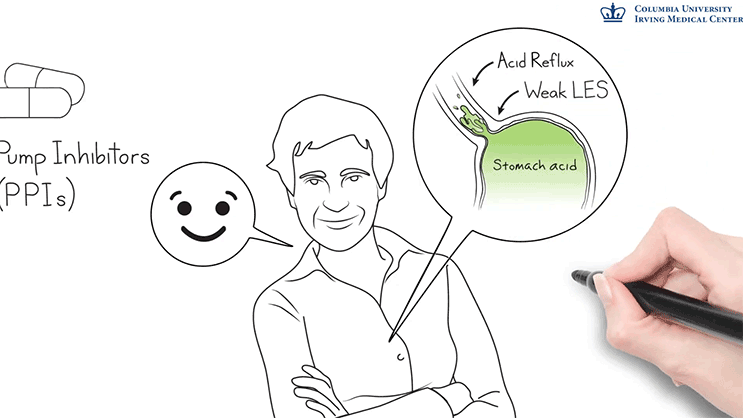
Gastroesophageal Reflux (GERD)
Melissa Bagloo, MD, a surgeon at the Center for Metabolic and Weight Loss Surgery at NewYork-Presbyterian Hospital/Columbia University Medical Center, talks about Gastroesophagel Reflux (GERD), also known as acid reflux, and its symptoms, diagnosis, and treatment.
Length: 7:14 min -
Hiatal Hernias
Melissa Bagloo, MD, a surgeon at the Center for Metabolic and Weight Loss Surgery at NewYork-Presbyterian Hospital/Columbia University Medical Center, addresses the types of hiatal hernias, their symptoms, diagnosis, and management.
Length: 6:34 min
General Surgery
-
Abdominal Wall Hernias
Peter Geller, MD, a surgeon at NewYork-Presbyterian/Columbia University Medical Center, explains the anatomy of the abdominal wall, the causes of abdominal wall hernias, and methods of hernia
Length: 9:11 min -
Diseases of the Gallbladder
Melissa Bagloo, MD, a surgeon at the Center for Metabolic and Weight Loss Surgery at NewYork-Presbyterian Hospital/Columbia University Medical Center, discusses diseases of the gallbladder, specifically gallstones or Cholelithiasis, their management and treatment options.
Length: 7:00 min -
Diseases of the Gallbladder and Their Management
Melissa Bagloo, MD, a surgeon at the Center for Metabolic and Weight Loss Surgery at NewYork-Presbyterian Hospital/Columbia University Medical Center, talks about diseases of the gallbladder such as disorders that accompany Cholelithiasis or gallstones, Choledocholithiasis, Gallstone Illeus, and Gallbladder Cancer.
Length: 4:56 min -
What is a Cholecystectomy?
Melissa Bagloo, MD, a surgeon at the Center for Metabolic and Weight Loss Surgery at NewYork-Presbyterian Hospital/Columbia University Medical Center, explains the laproscopic and open Cholecystectomy procedure.
Length: 2:01 min
Heart
-
Aortic Root Surgery Procedure: Columbia Bioroot
Allan Stewart, MD, Director of the Aortic Surgery Program at NewYork-Presbyterian Hospital, provides an excellent introduction the aortic valve, aortic valve disease, and aortic valve surgery.
Length: 21:03 min -
Aortic Valve Disease and Surgery
Allan Stewart, MD, Director of the Aortic Surgery Program at NewYork-Presbyterian Hospital, provides an excellent introduction the aortic valve, aortic valve disease, and aortic valve surgery.
Length: 5:10 min -
Cardiogenic Shock
Hiroo Takayama, MD, PhD, surgeon at NewYork-Presbyterian Hospital/Columbia University Medical Center, provides causes, symptoms, diagnosis, and treatment of Cardiogenic Shock.
Length: 5:30 min -
Do I need a special diet after heart surgery? Dr. Emile Bacha, MD
Length: 00:41 minHeart surgery on its own is a life-changing event. In this video, cardiothoracic surgeon Dr. Emile Bacha discusses whether dietary changes are necessary after having heart surgery.
-
Do I need to quit smoking before heart surgery? Dr. Emile Bacha, MD
Length: 00:51 minSmoking is harmful for anyone, but if you're about to have heart surgery you should definitely kick the habit. In this video, cardiothoracic surgeon Dr. Emile Bacha outlines the specific reasons smoking is bad for heart surgery patients.
-
Dr. Yoshifuma Naka Discusses the HeartMate II
Dr. Yoshifuma Naka, Associate Professor of Surgery at Columbia University College of Physicians & Surgeons, New York, NY, discusses the HeartMate II.
Length: 3:58 min -
Heart Attack Symptoms
Mehmet C. Oz, M.D., Vice Chairman of Cardiovascular Services and Medical Director of the Integrative Medicine Program at New York-Presbyterian/Columbia University Medical Center discusses heart attack symptoms and how they are not always the dramatic chest grabbing types like in the movies.
Length: 2:01 min -
Heart Disease
Jeffrey W. Moses, MD
Length: 1:04 min -
How does mitral valve repair compare with mitral valve replacement? Craig Smith, MD
Length: 01:20 minTo repair or replace? Often, that is the question with a damaged mitral valve. In this video, cardiothoracic surgeon Craig Smith discusses the best candidates for each procedure.
-
How is hypertrophic cardiomyopathy diagnosed? Hiroo Takayama, MD
Length: 01:08 minThe first symptom of hypertrophic cardiomyopathy may be a heart murmur, but the condition is usually diagnosed with an echocardiogram. Watch this video with thoracic surgeon Dr. Hiroo Takayama to learn why a family history of the disease suggests early screening.
-
How is hypertrophic cardiomyopathy treatment changing? Hiroo Takayama, MD
Length: 00:56 minThere has been lots of promising progress in treating hypertrophic cardiomyopathy over the last decade. Watch this video with thoracic surgeonDr. Hiroo Takayama to learn about minimally invasive techniques to relieve the thickness of the heart muscle.
-
How to Have a Healthy Heart
Mehmet C. Oz, M.D., Vice Chairman of Cardiovascular Services and Medical Director of the Integrative Medicine Program at New York-Presbyterian/Columbia University Medical Center, discusses ways to have a healthy heart: exercise, proper diet, stop smoking, maintain a healthy weight, monitor your blood pressure, blood sugar, and cholesterol, and partnering with your doctor.
Length: 2:01 min -
Hypertrophic Cardiomyopathy
Hiroo Takayama, MD, PhD, surgeon at NewYork-Presbyterian Hospital/Columbia University Medical Center, defines hypertrophic cardiomyopathy, its diagnosis, genetics, symptoms, and treatment.
Length: 6:23 min -
Noted Heart Surgeon
Mehmet Oz, MD
Length: 2:40 min -
Surgery for Hypertrophic Cardiomyopathy
Hiroo Takayama, MD, PhD, surgeon at NewYork-Presbyterian Hospital/Columbia University Medical Center, narrates a surgery video of a hypertrophic cardiomyopthy procedure.
Length: 2:45 min -
What are the conditions associated with hypertrophic cardiomyopathy? Hiroo Takayama, MD
Length: 00:52 minHypertrophic cardiomyopathy is associated with a few serious conditions — from a thickening of the muscle on the left side to heart arrhythmia. Watch this video with thoracic surgeon Dr. Hiroo Takayama to learn why hypertrophic cardiomyopathy is also linked to the leading cause of sudden death in young people and athletes.
-
What are the risks associated with LVADs? Craig Smith, MD
Length: 01:22 minA LVAD (Left Ventricular Assist Device) can keep a failing heart pumping but it used to carry a significant risk of stroke. Improvements have whittled that risk down, but there are still dangers. Watch this video with cardiothoracic surgeon Craig Smith to learn about the subtle but important risks that come with the latest generation of pumps.
-
What are the risks associated with LVADs? Hiroo Takayama, MD
Length: 01:20 minThe risks of surgery for LVAD, or left ventricular assist device, are similar to open heart surgery – mainly, infection and bleeding. Watch this video with thoracic surgeon Dr. Hiroo Takayama to learn why the right side of the heart needs special attention with this procedure.
-
What are the risks of aortic valve replacement surgery? Craig Smith, MD
Length: 1:18 minTraditional aortic valve replacement carries all the dangers of open-heart surgery; in TAVI (transcatheter aortic valve replacement), your chest isn't cracked, but this procedure isn't risk-free either. Check out this video with Dr. Craig Smith, a cardiothoracic surgeon, to learn why TAVI carries a small threat of stroke.
-
What happens after an LVAD is placed? Hiroo Takayama, MD
Length: 01:50 minSurgery for LVAD, or left ventricular assist device, typically takes 4-5 hours followed by a 3-7 day stay in the ICU. Watch this video with thoracic surgeon Dr. Hiroo Takayama to hear what a patient needs to know about the proper care and treatment of the device.
-
What happens during an aortic valve replacement surgery? Craig Smith, MD
Length: 01:10 minThe notion of having your chest opened and your heart exposed is enought to give you pause, even if you need a valve replacement. Check out this video with Dr. Craig Smith, a cardiothoracic surgeon, to learn what happens in aortic valve replacement surgery, step by step.
-
What is a left ventricular assist device (LVAD)? Craig Smith, MD
Length: 01:12 minA LVAD (Left Ventricular Assist Device) can help a failing heart keep pumping. Check out this video with cardiothoracic surgeon Craig Smith to learn more about how an LVAD works and whether it’s a temporary or permanent solution.
-
What is a left ventricular assist device (LVAD)? Hiroo Takayama, MD
Length: 00:30 minLVAD, or left ventricular assist device, is a type of artificial heart connected to the left ventricle through the aorta. Watch this video with thoracic surgeon Dr. Hiroo Takayama to learn about how the pump propels blood to support the heart.
-
What is hypertrophic cardiomyopathy? Hiroo Takayama, MD
Length: 02:02 minAbout 1 in 500 people have hypertrophic cardiomyopathy, a thickening of the muscle on the left side of the heart. Watch this video with thoracic surgeon Dr. Hiroo Takayama to learn about typical symptoms – and why certain high-risk patients may be asymptomatic.
-
What is an off-pump coronary artery bypass surgery? Craig Smith, MD
Length: 01:06 minIn off-pump cardiac artery bypass surgery (OPCAB), a doctor repairs the heart without having to stop it. In this video, cardiothoracic surgeon Craig Smith explains why 25% of heart surgeries are now done this way.
-
What is the procedure for a minimally invasive heart surgery? Craig Smith, MD
Length: 01:09 minThere are many types of minimally invasive heart surgery. In this video, cardiothoracic surgeon Craig Smith explains the different kinds of incisions involved and discusses which procedures leave patients with a smaller, less obvious scar.
-
What is transcatheter aortic-valve implantation (TAVI)? Craig Smith, MD
Length: 00:50 minReplacing the aortic valve usually requires open-heart surgery but not with TAVI (Trans-Catheter Aortic Valve Implantation). Check out this video with Dr. Craig Smith, a cardiothoracic surgeon, to find out about this streamlined procedure.
-
What should I ask my doctor about hypertrophic cardiomyopathy treatment? Hiroo Takayama, MD
Length: 01:49 minAssessing the risk of sudden cardiac death is a patient’s most pressing question, but queries about defibrillators, arrhythmia, medication and possible surgery are important too. Watch this video with thoracic surgeon Dr. Hiroo Takayama to learn why it’s also smart to discuss risk assessment for family members.
-
What should I know before I have mitral valve repair or replacement? Craig Smith, MD
Length: 01:28 minIf you have to decide whether to repair or replace your mitral valve, you need to understand what exactly is wrong with the valve in the first place. Check out this video with Dr. Craig Smith, a cardiothoracic surgeon, to learn the factors that make repair or replacement the better option.
-
What types of heart diseases are treated with surgery? Dr. Emile Bacha, MD
Length: 01:03 minSometimes it takes more than medicine to treat heart disease. In this video, cardiothoracic surgeon Dr. Emile Bacha discusses when and why heart disease requires surgery
-
Which hypertrophic cardiomyopathy patients are good candidates for surgery? Hiroo Takayama, MD
Length: 01:16 minSome, not all, patients with hypertrophic cardiomyopathy need surgery to shave down the thickened heart muscle – especially if medications alone don't relieve symptoms. Watch this video with thoracic surgeon Dr. Hiroo Takayama to learn about long-term surgical results.
-
Which patients might benefit from transcatheter aortic valve replacement Craig Smith, MD
Length: 00:54 minMany patients who have a narrowing in the opening of the aortic valve might benefit from TAVI (transcatheter aortic valve implantation). Check out this video with Dr. Craig Smith, a cardiothoracic surgeon, to learn why TAVI is recommended for high-risk patients and what the current thinking is for patients at lower risk.
-
Who is a candidate for a heart transplant? Craig Smith, MD
Length: 00:310minA variety of medications and other treatments can do wonders for a failing heart, but there are times when they're not enough. In this video, cardiothoracic surgeon Craig Smith explains when a heart transplant is the only option.
-
Who is a candidate for off-pump coronary artery bypass? Craig Smith, MD
Length: 00:51 minYour anatomy and the particulars of your heart condition help determine if you're a good candidate for off-pump cardiac artery bypass surgery (OPCAB) surgery done while your heart is still beating. But there's one other factor, says cardiothoracic surgeon Craig Smith: your surgeon's preference. Watch this video to find out why that matters.
-
Who is at risk for hypertrophic cardiomyopathy? Hiroo Takayama, MD
Length: 00:36 minHypertrophic cardiomyopathy is a disease with a strong genetic component so family history is a key to risk. Watch this video with thoracic surgeon Dr. Hiroo Takayama to learn why having a family member who died early or suddenly of cardiac arrest is also cause for screening.
Liver Disease and Transplantation
-
How do living donor and deceased donor liver transplants compare? Robert Brown, MD
Length: 01:21 minIn a living donor transplant, the recipient gets part of a liver; in a deceased donor transplant, the patient gets the whole liver, according to liver transplant surgeon Dr. Robert Brown. Watch the video to learn why a living-donor organ can lower a patient's chance of dying by 50 percent.
-
How is hepatitis B diagnosed? Robert Brown, MD
Length: 00:42 minA hepatitis B infection has no symptoms until it's in an advanced stage, so people at risk for it should be screened with simple blood tests. Learn more about the risk factors for hepatitis B infection by watching this video featuring liver transplant surgeon Dr. Robert Brown.
-
How is hepatitis B treated? Robert Brown, MD
Length: 01:27 minThere are a variety of treatments for hepatitis B, most of which are long-term. Watch this video featuring liver transplant surgeon Dr. Robert Brown to learn about two medications that suppress the virus in 90 percent of patients.
-
How is hepatitis C (HCV) diagnosed? Robert Brown, MD
Length: 01:01 minSince many patients have no symptoms of hepatitis C (HCV), the Centers for Disease Control recommend baby boomers get a simple screening blood test for HCV. Watch this video featuring liver transplant surgeon Dr. Robert Brown to learn more.
-
How is hepatitis C (HCV) treated? Robert Brown, MD
Length: 01:34 minFor years hepatitis C (HCV) has been treated with weekly interferon injections. In this video, liver transplant surgeon Dr. Robert Brown discusses newer treatments for HCV that have fewer side effects — and better cure rates.
-
Innovations in Liver Transplantation
This 26-minute video, produced by Information Television Network, includes interviews with patients and transplant surgeons at NewYork-Presbyterian Hospital's Center for Liver Disease and Transplantation.
Length: 26:40 min -
Surgical Treatment of Colorectal Cancer Metastasis to the Liver
Benjamin Samstein, M.D., the Surgical Director at the Living Donor Liver Transplant Program and an Attending Surgeon at New York-Presbyterian Hospital/Columbia University Medical Center in New York City, discusses surgical treatment of colorectal cancer that has metastasized to the liver.
Length: 6:41 min -
What degree of liver failure necessitates a liver transplant? Robert Brown, MD
Length: 01:42 minA patient's "model for end-stage liver disease," or MELD, score, is key to whether surgery makes sense. Learn more about liver transplants and MELD scores by watching this video featuring liver transplant surgeon Dr. Robert Brown.
-
What happens during a liver transplant operation? Robert Brown, MD
Length: 01:37 minA liver transplant is one of the most complex operations there is. Learn more about liver transplant surgery by watching this video featuring liver transplant surgeon Dr. Robert Brown.
-
What is a living donor liver transplantation? Robert Brown, MD
Length: 02:01 minLiving donor liver transplants started as a way to cope with a shortage of deceased donor organs. Watch this video featuring liver transplant surgeon Dr. Robert Brown to learn more about this approach to treating liver disease.
-
What is hepatitis B? Robert Brown, MD
Length: 00:44 minThe hepatitis B virus lives in the liver and is present in most body fluids, so it can be passed sexually or through blood to blood contact (mother to child, say). Learn more about hepatitis B by watching this video featuring liver transplant surgeon Dr. Robert Brown.
-
What is hepatitis C (HCV)? Robert Brown, MD
Length: 00:19 minHepatitis C (HCV) is a virus that attacks the liver, causing inflammation and other problems. In this video, liver transplant surgeon Dr. Robert Brown discusses the long-term effects of hepatitis C.
-
What makes someone a good candidate for a liver transplant? Robert Brown, MD
Length: 01:04 minA good candidate for a liver transplant needs to be in good heart and lung health. Watch this video featuring liver transplant surgeon Dr. Robert Brown to learn why the post-surgery regimen requires a compliant-minded patient.
-
What makes someone a good candidate to be a liver donor? Robert Brown, MD
Length: 00:37 minBecoming a liver donor is a courageous thing to do. In this video, liver transplant surgeon Dr. Robert Brown discusses what makes someone a good candidate for liver donation.
-
What quality of life can I expect after a liver transplant? Robert Brown, MD
Length: 02:28 minWith care and a lifetime of immunosupressants, liver transplant patients can lead a high quality life. Watch this video featuring liver transplant surgeon Dr. Robert Brown to learn which precautions liver transplant patients should take.
Pancreas
-
Surgery for Unresectable Pancreatic Cancer
John Chabot, MD of the Pancreas Center and surgeon at NewYork-Presbyterian Hospital/Columbia University Medical Center, discusses when surgery is appropriate for patients with pancreatic cancer as well as the advances made in pancreatic surgical options.
Length: 3:45 min
Pediatric Cardiac
-
Pediatric Cardiac Surgery
Each year, pediatric cardiac surgeons at the Congenital Heart Center perform more than 700 cardiac operations, including some 25 heart transplants, and 175 newborn heart repairs. This 4-part webcast educates professionals and families about the care available for children with congenital heart disease. -
Do children grow out of heart abnormalities Dr. Emile Bacha, MD
Length: 00:41 minHeart abnormalities can be scary stuff. In this video, cardiothoracic surgeon Dr. Emile Bacha discusses whether heart defects are always permanent or not.
-
How are pediatric congenital heart defects treated? Dr. Emile Bacha, MD
Length: 01:18 minPediatric congenital heart defects are complex, but many can be treated without surgery. In this video, cardiothoracic surgeon Dr. Emile Bacha describes surgical and nonsurgical treatments for congenital heart defects.
-
What diseases often lead to heart transplants in children? Dr. Emile Bacha, MD
Length: 02:31 minIt's rare for a child to need a heart transplant, but it happens. In this video, cardiothoracic surgeon Dr. Emile Bacha discusses conditions that could cause a child to need a heart transplant.
-
Why are some children born with congenital heart defects? Dr. Emile Bacha, MD
Length: 01:15 minMany parents feel responsible after finding out their child has a heart defect. In this video, cardiothoracic surgeon Dr. Emile Bacha explains why moms and dads aren't to blame for congenital heart defects.
Plastic
-
Attain Your Personal Best Ask-the-Surgeon Webinar Robert T. Grant, MD
Whatever the case, we all strive each day to achieve our personal bestin our career, our family and yes, our appearance. But with so many cosmetic products and procedures out there, it's hard to separate advertising ploys from their real results. Dr. Robert T. Grant, the highly accredited Plastic Surgeon-in-Chief of New York-Presbyterian Hospital/Columbia University Medical Center and Weill Cornell Medical Center, uncovers the truth and answers all your questions.
Length: 42 min -
How can I ensure that I have a safe cosmetic surgery? Robert T. Grant, MD
Length: 02:04 minTo have a safe cosmetic surgery, start by researching the who (a board certified surgeon) and the where (an accredited facility). Watch this video featuring cosmetic and reconstructive surgeon Dr. Robert T. Grant to learn about the why, as well as when it makes sense to seek a second opinion.
-
How can vision be affected after cosmetic eyelid surgery? Robert T. Grant, MD
Length: 01:24 minMost likely, the only vision problems you'll have after eyelid surgery will be due to temporary swelling. Even so, says cosmetic and reconstructive surgeon Dr. Robert T. Grant, a pre-surgical visit to an ophthalmologist makes good vision sense. Watch the video to learn more.
-
How does my age help determine which cosmetic procedures are right for me? Robert T. Grant, MD
Length: 01:38 minAge — and aging — are certainly factors when it comes to the cosmetic procedures women choose. In this video, cosmetic and reconstructive surgeon Dr. Robert T. Grant discusses options for women in their menopausal years that won't leave them looking "too done."
-
What are the risks of plastic surgery complications? Robert T. Grant, MD
Length: 02:06 minCosmetic surgery, like any surgery, involves risks – scarring, possible infection and, in this case, the chance that the procedure doesn't meet the patient’s expectations. Watch this video with cosmetic and reconstructive surgeon Dr. Robert T. Grant to learn why seeing an internist before surgery is a good risk-minimizing strategy.
-
What can I expect after cosmetic plastic surgery? Robert T. Grant, MD
Length: 1:36 minAdvances in surgical technique, anesthesia methods and pain control mean that, in many cases, patients no longer have the downtime associated with recovering from general anesthesia. The incidence of nausea and vomiting after surgery is markedly decreased and patients are often able to get back into their daily routines more quickly. While surgical healing does take time, most patients can expect to return to normal activities in just a few weeks.
Don't expect to be camera-ready right after cosmetic plastic surgery. Your body will need some time to heal, says cosmetic and reconstructive surgeon Dr. Robert T. Grant. Learn how long recovery can take, and what you should ask your doctor pre-surgery, by watching this video.
-
What factors should I consider when deciding on plastic surgery? Robert T. Grant, MD
Length: 01:36 minIf you're pondering plastic surgery, there are a number of important factors to consider. Learn how to get gold standard treatment by watching this video featuring cosmetic and reconstructive surgeon Dr. Robert T. Grant.
-
What is blepharoplasty? Robert T. Grant, MD
Length: 01:16 minIt's a mouthful, but blepharoplasty actually focuses on the eyes. Learn how this procedure can help you look younger and more rested by watching this video featuring cosmetic and reconstructive surgeon Dr. Robert T. Grant.
-
What is a mid-facelift? Robert T. Grant, MD
Length: 02:10 minA mid-facelift focuses on the area below the eyes to the jaw line — where gravity is likely to first takes its toll. Watch this video featuring cosmetic and reconstructive surgeon Dr. Robert T. Grant to learn why less can be more when it comes to the mid-lift.
-
Who is a good candidate for eyelid surgery? Robert T. Grant, MD
Length: 01:34 minEyelid surgery works best for people whose eyes are healthy in general. To learn who may not be great candidates for eyelid surgery, watch this video featuring cosmetic and reconstructive surgeon Dr. Robert T. Grant.
-
Who is a good candidate for facelift surgery? Robert T. Grant, MD
Length: 02:10 minPeople who take care of their skin and are in good overall health typically are the best candidates for facelift surgery, but those who are overweight may have complications. In this video, cosmetic and reconstructive surgeon Dr. Robert T. Grant explains why.
Thyroid and Parathyroid
-
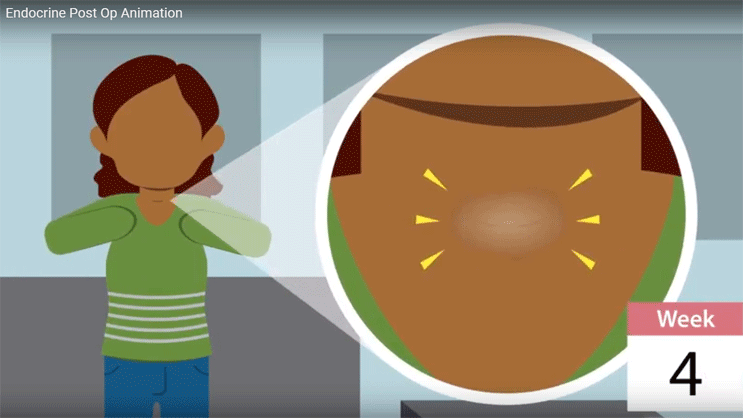
The Thyroid and Parathyroid Glands
CoachSurgery.com
Length: 1:19 min
Vascular
-
Anatomy and Diagnosis of Vein Disease
Steve Elias, MD, FACS, FACPh the Director of Columbia Vein Programs in the Division of Vascular Surgery at Columbia University Medical Center, talks about the anatomy and diagnosis of Vein Disease.
Length: 5:51 min -
Dr. Steve Elias, Director, Columbia University Division of Vascular Surgery Vein Programs
Dr. Steve Elias, Director, Columbia University Division of Vascular Surgery, Vein Programs, discusses the formation of the Columbia Vein Programs, the different types of treatments used, such as Closure, ClariVein and ELVT, how minimally invasive techniques have changed the vein procedures, as well as what patients should expect after treatment.
Length: 5:55 min -
How are varicose veins diagnosed? Steve Elias, MD
Length: 00:55 minNobody enjoys being poked or prodded. Thankfully, there are pain-free ways to diagnose varicose veins, says vascular surgeon Dr. Steve Elias. Watch the video to learn more.
-
How can I prevent varicose veins and spider veins? Steve Elias, MD
Length: 01:01 minGenetics play a major role when it comes to varicose veins. Although you can't change your family tree, there are easy ways to minimize the risk of these unsightly veins, which vascular surgeon Dr. Steve Elias details in this video.
-
How have minimally invasive procedures changed varicose vein treatment? Steve Elias, MD
Length: 00:48 minVein treatment is a walk in the park thanks to minimally invasive procedures. Vascular surgeon Dr. Steve Elias describes the many ways these newer options are superior to older, painful methods.
-
How is sclerotherapy performed? Steve Elias, MD
Length: 00:58 minSclerotherapy might seem overwhelming if you don't know what to expect. In this video, vascular surgeon Dr. Steve Elias offers a thorough description of what happens during sclerotherapy treatment for varicose veins.
-
Is sclerotherapy effective? Steve Elias, MD
Length: 00:56 minAlthough you might not be 100 percent varicose vein-free after sclerotherapy, it can make a huge difference in how you look and feel. In this video, vascular surgeon Dr. Steve Elias gives the details on what patients can and can't expect from the treatment.
-
Minimally Invasive Vein Care
Steve Elias, MD, FACS, FACPh the Director of Columbia Vein Programs in the Division of Vascular Surgery at Columbia University Medical Center, addresses the diagnosis and symptoms of venous disease and the minimally invasive vein care techniques offered at the Vein Programs.
Length: 7:37 min -
Peripheral Arterial Disease Diagnosis and Medical Treatment
Roman Nowygrod, MD, a surgeon at NewYork-Presbyterian/Columbia University Medical Center, discusses the cause of Peripheral Arterial Disease (PAD), its diagnosis, and its medical treatments.
Length: 7:38 min -
Surgical Approaches for Peripheral Arterial Disease (PAD)
Roman Nowygrod, MD, a surgeon at NewYork-Presbyterian/Columbia University Medical Center, explains the different surgical approaches to treat Peripheral Arterial Disease (PAD).
Length: 5:38 min -
Types of Vein Disease
Steve Elias, MD, FACS, FACPh the Director of Columbia Vein Programs in the Division of Vascular Surgery at Columbia University Medical Center, talks about the different types of vein disease as well as spider veins and varicose veins.
Length: 4:02 min -
Vein Circulation Problems, Diagnosis, & Management
Roman Nowygrod, MD, a surgeon at NewYork-Presbyterian/Columbia University Medical Center, describes vein circulation problems, their diagnosis, and management.
Length: 14:04 min -
What are varicose veins? Steve Elias, MD
Length: 01:16 minVaricose veins aren't just ugly — they can really hurt! In this video, vascular surgeon Dr. Steve Elias gives the lowdown on what varicose veins are and why they pop up in the first place.
-
What is sclerotherapy? Steve Elias, MD
Length: 00:33 minSclerotherapy is a common varicose vein treatment. Watch this video for an easy breakdown of the procedure by vascular surgeon Dr. Steve Elias.
-
What procedures help treat varicose veins? Steve Elias, MD
Length: 03:35 minVaricose vein treatments have come a long way! Watch this video to learn about the quick and practically pain-free procedures that vascular surgeon Dr. Steve Elias recommends for treating varicose veins.
-
When should someone seek treatment for varicose veins? Steve Elias, MD
Length: 01:03 minVaricose veins may not seem like a big deal, but many people want or need to get rid of them. In this video, vascular surgeon Dr. Steve Elias details three reasons patients often seek treatment.
Weight Loss
-
Adolescent Obesity Surgery
Jeffrey Zitsman, M.D., the Director of the Center for Adolescent Bariatric Surgery at NewYork-Presbyterian Morgan Stanley Children's Hospital at Columbia University Medical Center, addresses questions regarding adolescent obesity surgery.
Length: 20:21 min -
Introduction to Bariatric Surgery
Beth A. Schrope, M.D., an attending surgeon at New York-Presbyterian Hospital/Columbia University Medical Center who specializes in bariatric surgery or surgery for weight loss, provides an introduction to the different weight loss surgery options available.
Length: 9:06 min -
Metabolic Surgery
Melissa Bagloo, MD, a surgeon at the Center for Metabolic and Weight Loss Surgery at NewYork-Presbyterian Hospital/Columbia University Medical Center, discusses metabolic surgery, diabetes, and its surgical options.
Length: 5:05 min -
Obesity Surgery in Teens
Jeffrey L. Zitsman, MD is the Director at the Center for Adolescent Bariatric Surgery at Morgan Stanley Children's Hospital NewYork-Presbyterian/Columbia University Medical Center. He discusses obesity operations commonly performed in teens, such as Gastric Banding, Gastric Sleeve, and Roux-en-Y Gastric Bypass.
Length: 6:06 min
Department of Surgery
-
History of the Department Lecture to the P&S Whipple Society
Through a lecture to the Physicians and Surgeons (P&S) Whipple Society, Kenneth A. Forde, M.D., Jose M. Ferrer Professor Emeritus at Columbia University's College of Physicians and Surgeons, shares his perspective on the history of Columbia University's Department of Surgery. He discusses the challenges and changes in the over 230 years of the department's existence.
Length: 27:10 min