info@columbiasurgery.org
  
eNewsletter HealthPoints Sign up for our HealthPoints E-Newsletter

Aortic Surgery
Patient Information
Related
Cardiac Surgery Section

Patient & Visitor Guides

Aortic Surgery Program
Aortic Surgery

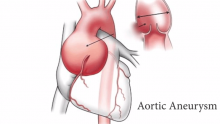
At NewYork-Presbyterian Hospital/Columbia University Medical Center (NYPH/Columbia), we offer a broad spectrum of alternatives for treating aortic root aneurysms. We tailor our approach to the individual needs of each patient. Patients are evaluated with echocardiogram, CT scan, and cardiac catheterization, when required. Based on those findings, we engage in a detailed discussion with the patient and family about appropriate surgical options.

During aortic root operations, the aortic valve may be repaired or replaced, depending on its appearance. Hybrid approaches that minimize the incision and decrease the operative time may be used. In our hybrid approaches, a stent may be placed to act as a scaffold for the diseased artery.

Aortic root surgery is performed in this program using axillary cannulation. This method enables the surgeons to preserve the natural flow of blood through the body and to the brain by redirecting blood from the aorta through an artery under the clavicle. This method of axillary cannulation has been shown to be safer than other methods of maintaining blood flow. Done this way, aortic root surgery has been shown to be safe for patients of all ages, including those in their 80s and 90s.
Learn more about axillary cannulation.

Dr. Craig Smith - What happens during an aortic valve replacement surgery?

Surgical Options for Aortic Root Aneurysms

Valve-Sparing Root Replacement: Removal of the damaged section of aorta, while preserving the aortic valve. Since the aortic valve remains intact, anticoagulation therapy (to prevent blood clots) is not required.

Columbia Bioroot: Replacement of the aortic root and valve with a novel stentless biologic aortic root-valve conduit developed by Dr. Stewart. This option provides patients with important advantages over the other available options.

Homograft root replacement: Removal of the aorta and the aortic valve, as well as the attachment of the coronary arteries. The aortic root is then reconstructed with the aid of a cadaveric human (homograft) aorta. The use of a human replacement valve eliminates the need for anticoagulation, provides superior blood circulation (hemodynamic function), and may offer longer freedom from reoperation than animal tissue alternatives.

Ross Procedure: The aortic root is removed, including the valve. The coronary arteries are removed from the diseased aorta. The pulmonary artery including the valve is removed. This pulmonary artery conduit will then become the new aorta. A cadaveric conduit is then selected to replace the pulmonary artery. The Ross procedure is generally reserved for younger patients, as valve-sparing procedures and advanced biological conduits have largely supplanted its use in adults.

Mechanical valve conduit: Replacement of the entire aorta root and aortic valve with a combination of a mechanical valve with an attached tube graft. Also called the modified Bentall operation, this approach is often used in younger patients or in those patients who wish to avoid reoperation. Anticoagulation therapy is required.

Transcatheter Aortic Valve Relacement: Replacement of the aortic valve in patients with severe aortic stenosis. The procedure is conducted minimally invasively using a catheter inserted either through a small incision in the groin or a small incision in the chest.


Columbia University Medical Center NewYork-Presbyterian Hospital Patient Clinician Researcher